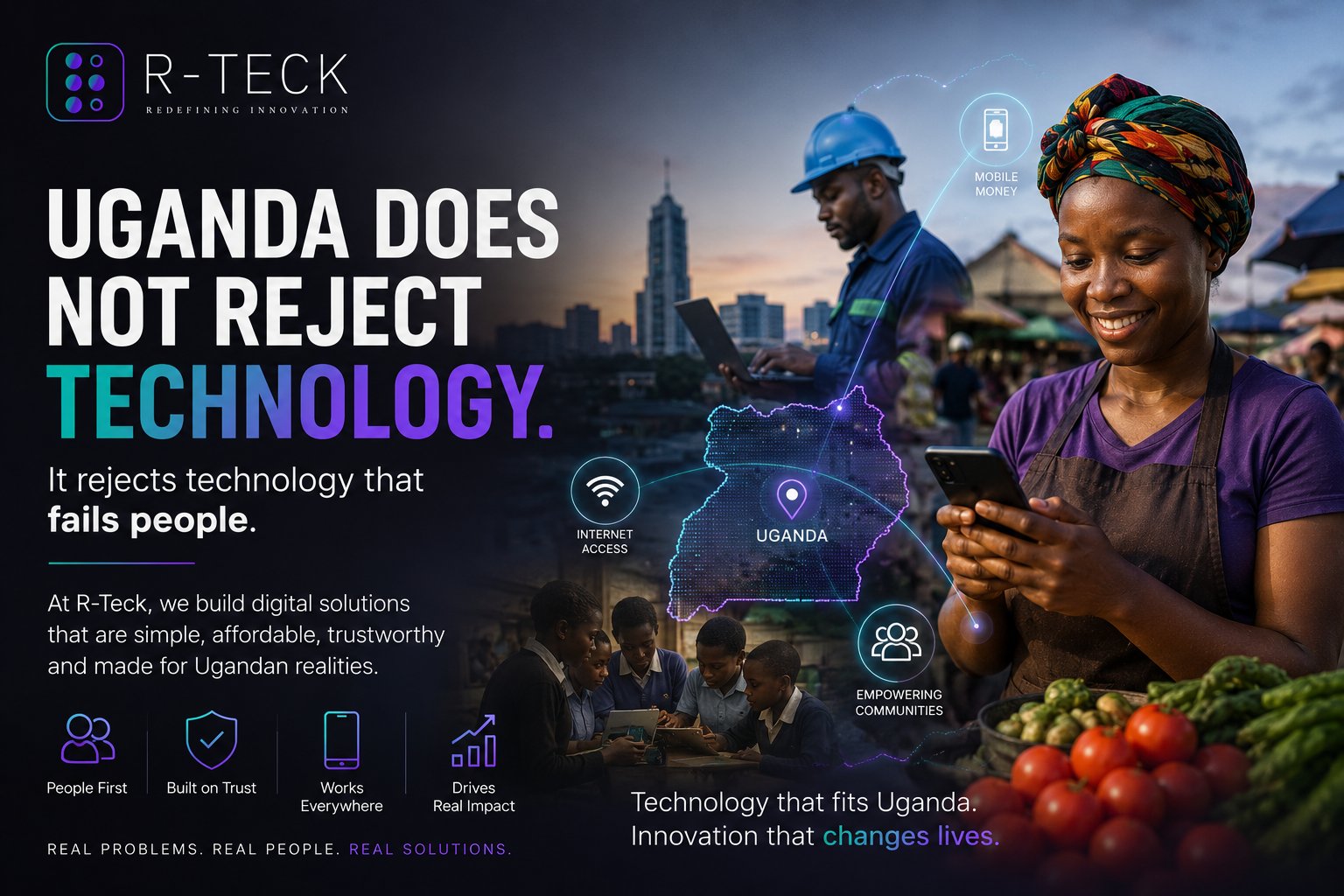
There is a lazy way to talk about technology in Uganda. When people resist a digital system, the quick conclusion is that they are afraid of change, slow to adapt, or somehow opposed to progress. That explanation is convenient. It is also weak.
Ugandans are not anti-technology. The evidence says otherwise. By the third quarter of 2025, the Uganda Communications Commission reported 45.7 million active mobile subscriptions, 17 million mobile internet subscriptions, 35.6 million mobile money subscriptions, and 19 million smartphones in use. That is not the profile of a society rejecting technology. That is the profile of a society already living inside it.
So what explains the resistance that still shows up whenever a new digital system is introduced?
The answer is simple, even if many technocrats dislike it: Ugandans reject technology when it is imposed faster than trust can be built, when it feels expensive, when it is confusing, and when it appears to serve enforcement before service.
The fight over EFRIS made that painfully clear. In April 2024, traders in Kampala shut their shops in protest over the Electronic Fiscal Receipting and Invoicing Solution, with reporting showing concerns about compliance burdens, turnover thresholds, and the fear that the system was being rolled out without enough practical consultation. The argument was never just about software. It was about whether the system understood the reality of small businesses.
That matters, because technology is never just technology. It changes power, habits, and livelihoods. If a digital platform feels like a tax trap, a surveillance tool, or a punishment mechanism, people will push back. That is not ignorance. That is rational self-protection.
Uganda’s digital identity story tells the same truth from another angle. Reuters reported that millions of Ugandans were denied vital services because they lacked digital ID cards, and human rights groups raised concerns that the system risked further excluding vulnerable groups. Reuters also reported earlier that the national digital ID requirement had already blocked some people from accessing public services, even when they had tried to register. When a system becomes a gatekeeper to healthcare, subsidies, or public benefits, any weakness in that system becomes a human problem, not a technical one.
This is the part many commentators miss. Ugandans are not asking for less technology. They are asking for better technology. They are asking for systems that are understandable, affordable, fair, and useful in the real conditions in which people live and work.
That is why mobile money succeeded where many grand digital projects struggled. It solved a real problem. It reduced dependence on cash, made transfers easier, and gave ordinary people a practical tool they could use immediately. The World Bank’s work on Uganda found that mobile money helped drive formal financial inclusion from 28 percent in 2009 to 52 percent, and a separate World Bank study on poor rural households found that mobile money improved livelihoods in remote areas of northern Uganda. People adopted it because it worked. They trusted it because it made life easier.
That distinction is the whole argument.
Uganda does not have a technology problem. It has a design-and-trust problem.
A system that works in a boardroom but fails at a market stall is not innovation. A platform that needs constant explanation, expensive data, perfect literacy, and strong infrastructure before it becomes useful is not inclusion. A digital rollout that ignores how people earn, save, move, and pay is not transformation. It is software arrogance dressed up as progress.
This is where R-Teck’s position must be clear.
We do not believe in building technology for applause. We believe in building technology that survives contact with reality.
That means we start from the user, not from the feature list. It means asking basic but hard questions before launch: Can this work on a weak network? Can a small business owner understand it without a consultant? Does it reduce effort or create more of it? Does it respect the user’s fear of being trapped, exposed, or overcharged? If the answer is no, then the product is not ready for Uganda.
Our position is not anti-modern. It is pro-adoption.
We believe technology in Uganda must do at least four things before it deserves attention. It must solve a real problem. It must be simple enough to use without a long lecture. It must be transparent enough to earn trust. And it must be affordable enough for ordinary people, not just for the well-connected.
That is why R-Teck will continue to build with Ugandan realities in mind. Not imported assumptions. Not foreign copy-paste solutions. Not products that look impressive online but collapse in the hands of the people they were supposed to help.
We are interested in technology that earns its place.
Uganda has already shown that when a digital tool is genuinely useful, people will adopt it quickly. The market is not closed. The public is not hostile. The barrier is not culture. The barrier is bad design, weak communication, and too little respect for the user.
That is the real challenge. And it is also the opportunity.
If Uganda is to move forward, the country does not need louder hype around innovation. It needs technology that people can trust, understand, and use without fear. That is the standard. That is the test. And that is the kind of future R-Teck wants to build.
Related

The Hidden Cost of Manual Workflows: How Automation is Saving Ugandan SMEs Millions
Discover how manual workflows are silently draining Ugandan SMEs of time and money — and how automation can transform efficiency, reduce errors, and boost profits with R-TECK solutions.
Comments (0)