
The illusion of movement
On any ordinary weekday morning, Ugandan businesses look alive.
Phones don’t stop ringing. Staff move quickly, half-running between tasks. The owner is everywhere at once — approving payments, settling disputes, calling suppliers, answering customers, fixing mistakes that shouldn’t exist in the first place.
From the outside, it looks like momentum.
Yet six months later, the business still feels fragile. A single delayed payment creates panic. One staff member taking leave causes confusion. One bad month threatens everything.
The workload increased.
The business did not become stronger.
This is the contradiction at the heart of many Ugandan enterprises: constant motion without real progress.
Survival has been mistaken for growth
Most local businesses are not built to grow.
They are built to survive the day.
In our business culture, busyness is treated as proof of seriousness. Long hours are respected. Stress is normalised. Firefighting is expected.
But busyness is not a strategy. It is usually a warning sign.
It signals unclear processes, weak systems, and decisions living inside people’s heads instead of inside the business. When structure is missing, urgency becomes the operating system.
And when everything is urgent, nothing important ever gets properly designed.
So the business runs — but it never matures.
When the founder becomes the system
Many business owners believe capital is their biggest constraint. If only they had more money, more staff, more customers, things would finally improve.
In reality, most Ugandan businesses are constrained by something closer and more uncomfortable.
They are constrained by the founder.
Not because the founder is incompetent — but because the business has absorbed their brain instead of building systems.
Approvals pass through one person. Information lives in WhatsApp chats. Records are scattered across notebooks, phones, and laptops. Nothing works unless the owner is present, alert, and involved.
At small scale, this feels normal. At larger scale, it becomes dangerous.
Growth doesn’t reduce pressure — it multiplies it.
Hard work hides weak foundations
This is how businesses quietly stall.
Sales are made, but no one knows which products are truly profitable. Invoices are issued, but payments aren’t tracked properly. Staff work hard, but accountability is vague.
Effort replaces evidence.
Decisions are made from gut feeling instead of data. Problems are discovered late instead of early. Growth feels exciting — until cash flow suddenly disappears and no one understands why.
These businesses don’t always collapse dramatically.
Many simply plateau. Others bleed slowly while still looking busy from the outside.
Real growth is surprisingly boring
Businesses that last are not powered by constant heroics.
They are powered by design.
Behind the scenes, they are calm. Processes are repeatable. Roles are clear. Information is visible. Decisions are supported by data, not panic.
This doesn’t kill hustle.
It gives hustle direction.
When systems exist, people stop guessing. Mistakes reduce. Results become predictable. And the business stops depending on one exhausted individual to keep it alive.
That is when growth becomes sustainable — not stressful.
The message your business is sending you
If your business feels busy but not stronger, that is not bad luck.
It is not just the economy.
It is not simply competition.
It is feedback.
Feedback that improvisation has reached its limit. Feedback that effort alone is no longer enough. Feedback that structure is overdue.
The coming years will not reward businesses that work the hardest. They will reward businesses that are intentionally built to operate well.
The real question is no longer whether you are busy.
It is whether your business is designed to grow — without breaking.
That difference will decide who survives the next few years — and who quietly disappears.
Related

Why Ugandan Businesses Still Struggle With Digital Transformation — And How R-TECK Solves It
In 2025, you would expect most Ugandan businesses to be running on modern systems. You’d expect farms to be digitally monitored, retail shops to track stock in real time, restaurants to automate orders, and SMEs to use data instead of guesswork. But walk into a typical Ugandan shop, factory, school, or farm and the reality hits you: Paper everywhere. Manual calculations. WhatsApp orders. Verbal instructions. Confusion masked as “the way we do things.” It’s not because Ugandan entrepreneurs lack ambition; many are incredibly bold. It’s because they’re carrying their businesses on a foundation built decades ago. And that foundation is cracking. This article explores the real reasons digital transformation in Uganda keeps failing — and what it will take for businesses to finally break free.

2026 Will Expose Weak Businesses — Is Yours Ready?
Most Ugandan businesses will fail in 2026. Not because they lack money. Not because the market isn’t there. Because they are fragile, unstructured, and invisible to their own weaknesses. If your business can’t run without you, it isn’t a business — it’s a job you created for yourself.
Digital Transformation in Uganda’s Manufacturing Sector: From Theory to Industrial Reality
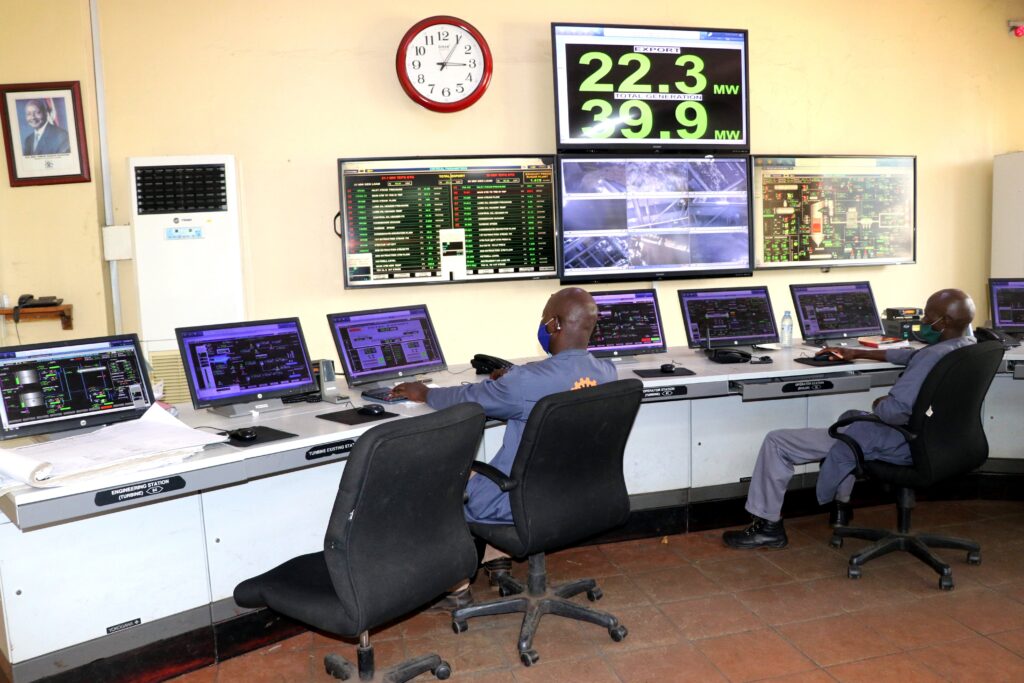
Digital transformation is redefining how Ugandan manufacturers control costs, manage people, and optimize production. Drawing insights from an Industry 4.0 workshop and a field study at Kakira Sugar Limited, this article explores how real-time data, system integration, and smart operations are turning traditional factories into efficient, competitive enterprises.
Comments (1)
Mark Collins 8 months ago
Thats certainly right. A lot of businesses have failed to progress due to some of the details above