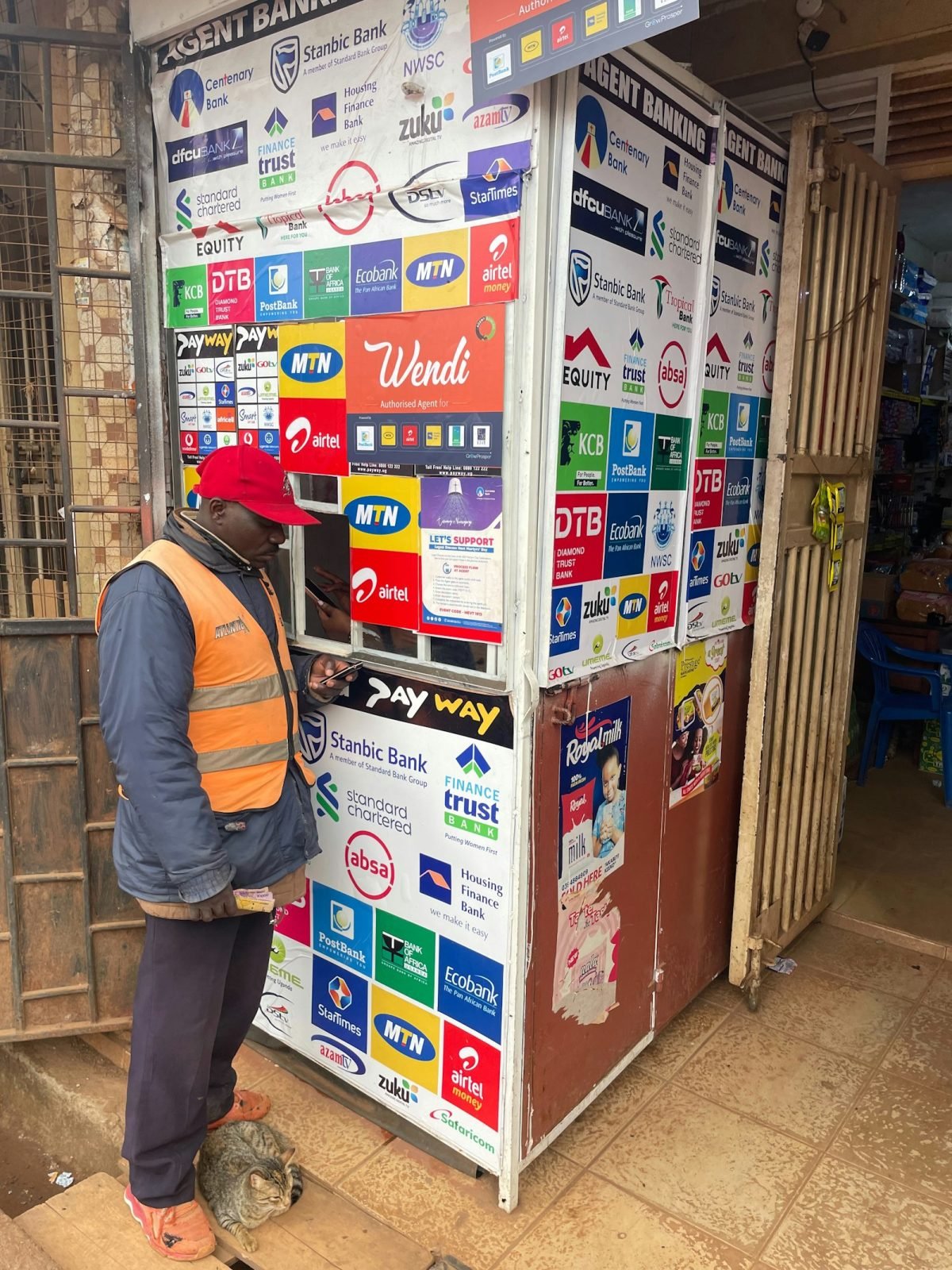
If a customer in Gulu wants to pay you at 9pm on a Sunday, can they? If you need to pay 40 field agents on Friday, does it take you an afternoon or ten minutes? The answers to those two questions are what "online payments" and "payouts" are really about. This guide explains both in plain language, with Uganda's realities in mind.
Why go digital at all?
Your customers have already moved. According to the Bank of Uganda, mobile money transactions were worth about UGX 191 trillion in the year to June 2023, across 5.8 billion transactions, with 42.9 million registered accounts and 26.4 million active ones. Even money from the diaspora now arrives mostly digitally: the central bank reports that mobile money carries about 61% of inbound remittances. The question is no longer whether your customers pay digitally — it is whether they can pay you that way.
Cash feels simple until you count what it costs you:
- You get paid more often. Customers can pay at any hour, from anywhere — upcountry, abroad, or from their bed. Every "I'll bring it tomorrow" is a sale at risk.
- Less risk. Cash gets stolen, miscounted or quietly pocketed. Trips to the bank cost time and transport and expose you on the road.
- Records build themselves. Every digital payment leaves a trail. That makes tax filing easier, disputes shorter, and your books honest without extra effort.
- Access to credit. Lenders and banks increasingly judge a business by its transaction history. A business that runs on cash looks invisible, however busy it is.
- Reach beyond your street. Online payments let you sell to customers you will never meet — other towns, other countries, the diaspora.
- Time back. Paying staff, agents and suppliers digitally turns a half-day of handing out envelopes into a few minutes of approvals.
Going digital does not mean refusing cash tomorrow. It means making the digital option the easiest one — for your customers and for you.
Two sides of the same problem
Most people think of online payments as one thing. It is actually two:
- Collections (payments in): a customer pays you — for an order, a subscription, school fees, a deposit.
- Payouts (payments out): you pay others — salaries, commissions, supplier invoices, refunds, loan disbursements.
They use overlapping tools but carry different risks. Collections are about convenience and trust; payouts are about control, accuracy and cost. A business that only solves one side still spends hours every week on the other.
How Ugandans actually pay
Any payment strategy in Uganda starts with mobile money. Most of your customers have an MTN MoMo or Airtel Money wallet; far fewer have a card they are willing to use online. Cards still matter — for diaspora customers, corporate clients and international buyers — but they are the second lane, not the first.
Bank transfers sit in a third lane: slower to confirm, but preferred for large invoices and business-to-business deals.
Your options for collecting payments
1. The manual way (merchant code or "send to this number")
Many businesses start here: a MoMo merchant code or a personal number on a poster. It works, it is free to set up, and it is also where most businesses lose money. Nothing confirms payments automatically, so staff must check messages, match amounts to orders, and chase people who "sent it" but did not. It does not scale past a handful of transactions a day.
2. Payment links and invoices
The fastest upgrade. A gateway such as Pesapal or Flutterwave lets you create a link — "Pay UGX 85,000 for Order #231" — and send it on WhatsApp. The customer picks MoMo, Airtel Money or card, and you get an automatic confirmation. No website needed. For most small businesses this is the right first step.
3. A gateway integrated into your website or app
When you run an online shop, booking system or app, the gateway sits inside your checkout. Customers pay without leaving your site, and your system records the payment itself. This is where a developer comes in. Common choices:
- Pesapal — long-established in East Africa, supports MTN, Airtel and cards, familiar to many Ugandan customers.
- Flutterwave — holds a Payment Systems Operator licence from the Bank of Uganda and supports both collections and bulk payouts, with strong cross-border and card coverage.
- Yo! Uganda — a local aggregator with deep telecom integrations, suited to high-volume mobile money.
- Direct MTN MoMo and Airtel Money APIs — the lowest fees per transaction, but you integrate each telecom separately and take on more technical work.
- Bank merchant services — some banks offer online collection tools, often with competitive charges for existing business customers.
Paying out: salaries, agents, suppliers and refunds
Payouts are where businesses with many recipients waste the most time. Typing 40 mobile money transfers by hand every Friday is slow, error-prone and impossible to audit properly.
The alternative is bulk payouts: you upload a list of names, numbers and amounts (or your system generates it), approve it once, and the money goes out to every wallet or bank account. The benefits go beyond speed:
- Accuracy: the amount paid always matches the amount in your records.
- Approval control: one person prepares, another approves. Nobody can quietly send money to themselves.
- Records: every payout has a reference you can match to a payslip, invoice or refund.
Lenders, SACCOs, delivery businesses and anyone paying commission-based agents benefit most. If you disburse loans, bulk payouts with proper approvals are basic risk management, not an optional extra.
What it costs
You pay in three places, so compare providers on all three — not just the headline rate:
- Transaction fees: a percentage of each payment collected. Cards usually cost more than mobile money.
- Payout and withdrawal charges: a fee per transfer out, plus telecom charges when money moves between wallets or is cashed out. Excise duty on mobile money withdrawals also affects your customers and agents.
- Settlement: the gateway holds your money, often for a day or more, before paying it to your bank or wallet. That delay is a real cost when cash flow is tight.
A gateway with a slightly higher fee but faster settlement and automatic reconciliation often saves more than it costs.
Five mistakes to avoid
- Collecting into a personal number. It mixes business and personal money, makes tax filing painful, and leaves you exposed if the phone is lost or the line reassigned.
- Trusting screenshots. Edited "payment received" screenshots are a common fraud. Confirm on your gateway dashboard or telecom message, never the customer's.
- Skipping reconciliation. Every payment in and out should match a record in your books. If you cannot say how much you collected online last week, you have a problem.
- One person with all the access. Separate who prepares payouts from who approves them, and keep logins and API keys out of shared WhatsApp groups.
- Building for cards first. Make mobile money the default, most visible option.
Where to start
If you still collect by merchant code and pay people by hand, do this in order:
- Open a proper business account with a gateway, plus a business mobile money account if you do not have one.
- Switch to payment links for all remote customers this month.
- Move recurring payouts — salaries, agents, suppliers — to a bulk payout tool with two-person approval.
- Only then invest in a full website or app integration, once your volumes justify it.
Each step pays for itself in recovered hours and fewer missing shillings.
Need help setting this up?
R-TECK helps Ugandan businesses choose the right payment provider, integrate it into their website, app or internal systems, and set up payout workflows with proper controls. Get in touch and tell us how you collect and pay today — we will tell you what to change first.
Sources: Bank of Uganda Annual Report 2022–23, as reported by Business Times Uganda; Bank of Uganda remittance data, as reported by AllAfrica; Flutterwave licence news via Nairametrics. Featured photo by Andrew Itaga on Unsplash.
Related

Why Ugandan Businesses Still Struggle With Digital Transformation — And How R-TECK Solves It
Paper records, manual calculations and WhatsApp orders still run most Ugandan shops, farms and factories. The problem is not ambition — it is systems built for a different environment. Why digital transformation keeps stalling here, and what it takes to fix it.

2026 Will Expose Weak Businesses — Is Yours Ready?
Many Ugandan businesses will struggle in 2026. Not because they lack money. Not because the market isn’t there. Because they are fragile, unstructured, and invisible to their own weaknesses. If your business can’t run without you, it isn’t a business — it’s a job you created for yourself.

Why Most Ugandan Businesses Are Always Busy — But Rarely Growing
Phones ringing, staff rushing, the owner everywhere at once — and six months later the business is no stronger. Busyness is not growth. Usually it is a sign that the business runs on its founder instead of on systems.
Comments (0)